
Love and Submission
Play Love and Submission
Love and Submission Screenshots













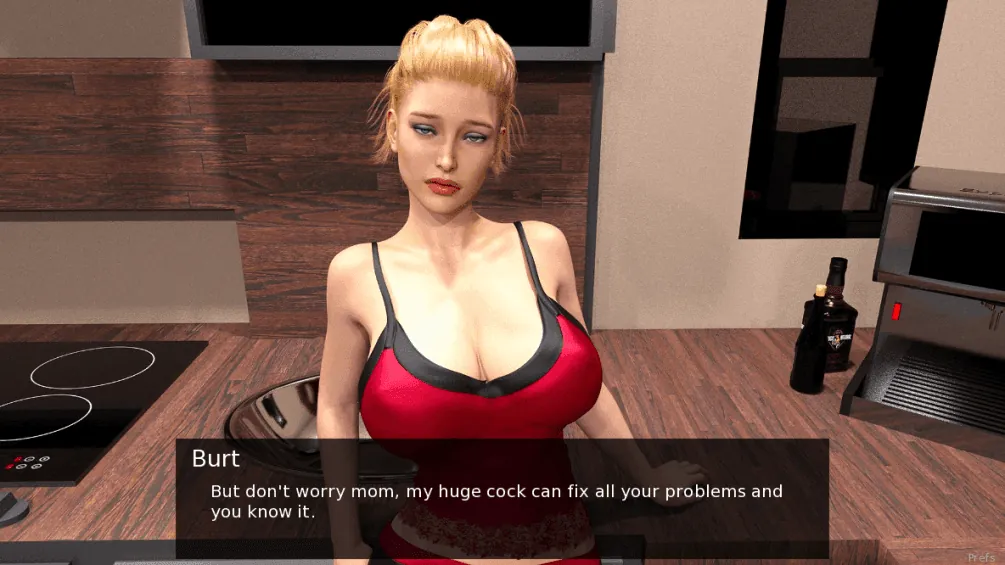
Love and Submission review
A practical guide to exploring routes, characters and decisions in Love and Submission
Love and Submission is a choice-driven adult game that blends character drama, mystery, and relationship-building into a long-form interactive story. From the first in-game days, you are balancing exploration, time management, and dialogue options as you get to know different characters and uncover hidden events. In this guide, I will walk you through how Love and Submission works in practice, what to expect from its pacing and routes, and the small decisions that can make a big difference in how the story unfolds. I will also share personal insights and concrete strategies drawn from multiple playthroughs so you can enjoy the game without feeling lost or overwhelmed.
How Does Love and Submission Work as a Game?
So, you’ve heard about Love and Submission and you’re curious. Maybe a friend mentioned it, or you saw it pop up in a forum. Your first question is probably the most important one: what is this thing, and how does Love and Submission work as a game? 🤔
If you’re imagining complex controls, quick-time events, or a high score to beat, let’s reset those expectations. Think of it less like a traditional video game and more like an interactive storybook where you are the author of your own… complicated, dramatic, and often steamy tale. 📖 The heart of the Love and Submission gameplay is about immersion, choice, and consequence, wrapped in a visual novel format. It’s a slow burn, a character-driven journey where your decisions quietly weave the narrative tapestry.
I remember firing it up for the first time, utterly bewildered. The screen showed a map, a clock, and a bunch of character portraits. “What am I supposed to do?” I wondered. I clicked around aimlessly for an hour, saw very little, and almost quit. It wasn’t until I let go of my “gamer” mindset—the need to win or complete something quickly—and embraced the role of an observer in a living world, that everything clicked. The magic of Love and Submission isn’t in flashy action; it’s in the quiet discovery. Let’s break down how this unique experience operates.
What Is the Core Idea Behind Love and Submission?
At its core, Love and Submission is a narrative-driven, choice-based visual novel with adult themes. You step into the shoes of a main character (usually customizable to some degree) who finds themselves in a new environment—a bustling city, a mysterious academy, a secluded estate. Your goal isn’t spelled out with a giant quest marker. Instead, it’s woven into the fabric of daily life: survive, connect, understand, and perhaps find your place among a cast of compelling characters. 🏙️
The premise is all about relationships and discovery. You’ll meet multiple characters, each with their own personalities, hidden depths, and personal struggles. The Love and Submission game masterfully blends slices of everyday life (shared meals, casual chats, work) with moments of high tension, humor, and intimate content. Your dialogue choices and actions directly influence which characters gravitate toward you, how they perceive you, and what kind of relationship unfolds—be it friendly, dominant, submissive, romantic, or fraught with conflict.
My own “aha!” moment came after a frustratingly slow start. I’d been playing for two hours and felt like I’d gotten nowhere. Then, on a whim, I visited the library in the evening instead of the afternoon. Bingo. A character was there who I’d only ever seen at the café, and she was in a completely different, more vulnerable mood. That single visit unlocked a new thread of conversation that changed our dynamic entirely. I realized the game structure wasn’t about racing forward; it was about being a persistent, curious presence in this digital world. The story unlocks not by grinding, but by paying attention.
How Are Days, Locations, and Events Structured?
This is where the unique Love and Submission gameplay loop comes into play. The experience is built on a cycle of in-game days, divided into time slots like Morning, Afternoon, and Evening. Each day, you are given a limited number of actions, typically represented by the ability to move between key locations on a map.
Think of each location as a potential stage where a scene could play out. The cafeteria might host a group chat in the morning, but be empty and serene in the evening, perfect for a private conversation. A character’s apartment might only be accessible after they’ve invited you, and even then, only at certain times. 🕒 The Love and Submission game structure is a delicate dance of time and place.
Events—which are the story scenes, both casual and intimate—are triggered by specific conditions. These can be:
* Time & Place: Being at the right location during the correct time slot.
* Relationship Level: Having reached a certain point of affinity or tension with a character.
* Story Flag: Having made a specific choice earlier in the game that “unlocks” this possibility.
* Sequence: Having seen a previous event in a chain.
The practical Love and Submission guide wisdom here is to adopt the habits of a detective or a stalker (the harmless, fictional kind!). 🕵️♂️
Pro Tip: Don’t just spam-click through dialogue. Characters will often drop subtle hints. “I’m always at the park on sunny afternoons to clear my head,” or “I have to work late at the office tonight.” These aren’t just flavor text—they’re your invitations and clues.
Here’s a simple breakdown of the core gameplay loop:
- Start a New Day: Check your status and any new notifications.
- Review the Map: See all available locations (some may be new!).
- Choose a Time Slot & Location: Ask, “Who do I want to see, and where might they be?”
- Engage in Scenes: Read the narrative, make dialogue and action choices.
- Unlock New Events: Your choices build invisible points, trigger flags, and open future possibilities.
- Repeat & Explore: Use subsequent days to follow up on storylines or explore new paths.
To make this crystal clear, let’s look at a narrative example of a single in-game day:
Morning: You choose to go to the Café. You find Alex there, looking stressed. In conversation, you have a choice: (Press about work) or (Change the subject to hobbies). You choose to change the subject, making them smile. They mention they’re trying to fix an old motorcycle in their garage.
Afternoon: You now have a clue! You go to the Garage District (a location you may not have visited before). Alex is there, surprised but pleased to see you. You help hand them tools (choice: (Offer genuine help) or (Make a flirtatious joke)). This builds rapport.
Evening: You’re out of actions, but the day ends. Because of your choices, the game’s internal logic flags your relationship with Alex as “Warm & Helpful.” Two days later, you might get a message from them: “Got the bike running! Want to go for a ride this evening?”—unlocking a completely new, special event.
This is the essence of the Love and Submission walkthrough mindset: it’s not about following a prescribed path, but about understanding these cause-and-effect chains.
Why Your Early Choices in Love and Submission Matter
Here’s the big secret many new players miss: Love and Submission is planting seeds from the very first conversation. 🌱 Those initial interactions aren’t just tutorials; they are foundational. The Love and Submission choices you make in the first few in-game days can have ripple effects that determine which character routes are smooth, which are rocky, and which might be closed off entirely for this playthrough.
The game often presents you with seemingly innocuous options. “How do you respond to a sarcastic remark?” or “Do you accept a minor favor?” These aren’t just about being “nice” or “mean.” They are defining your character’s personality and, more importantly, signaling to other characters who you are. A character who values strength might be put off by a submissive early choice, while another might find it intriguing. This is what makes the Love and Submission game so replayable—early decisions branch the narrative in subtle but significant ways.
Let me share a small case study from my playthrough. Very early on, I met two core characters: the confident, imposing “R” and the more reserved, observant “K.” During a group scene, R made a bold, slightly arrogant statement. I was given a choice: (Chuckle and agree with R) or (Stay quiet and glance at K).
It felt minor. I chose to stay quiet and glance at K. In the moment, nothing dramatic happened. R didn’t comment, and K offered a small, almost imperceptible nod.
But the game logged that. For the next several days, R’s dialogue with me was slightly more distant, as if I’d failed a small test of loyalty. K, however, began initiating more conversations. Days later, when a major story conflict erupted between R and K, I was given a pivotal choice. Because of my early, quiet alignment with K, I had the option to actively defend them, which unlocked a deeply emotional scene and set me firmly on K’s personal route. The “agreement” path with R led to a completely different, power-dynamic-heavy scene. One tiny, early choice had bifurcated my entire experience.
This is the power of the Love and Submission gameplay. It makes your story feel uniquely yours. You don’t need a perfect, optimized run. In fact, embracing the “mistakes” and unintended consequences is where much of the drama and fun lies! This isn’t a Love and Submission walkthrough you follow step-by-step; it’s a Love and Submission guide to understanding a system where your intentionality is the main feature.
So, take a deep breath, dive in, and don’t be afraid to click. Be curious, be consistent, and pay attention. Your journey through the rich, complicated world of Love and Submission is waiting to be written—one careful, consequential choice at a time. ✨
Love and Submission rewards curiosity, patience, and thoughtful decision-making more than rushing from scene to scene. Once you understand how days, locations, and character interactions fit together, the game shifts from confusing to genuinely engaging, with routes that feel tailored to the way you like to play. Whether you are here for the character drama, the adult content, or the sense of slowly uncovering hidden events, taking time to explore and paying attention to subtle hints will make your experience far more satisfying. If the idea of a slow-burn, choice-driven story appeals to you, Love and Submission is worth committing to a full playthrough and experimenting with different decisions to see how the story can change.