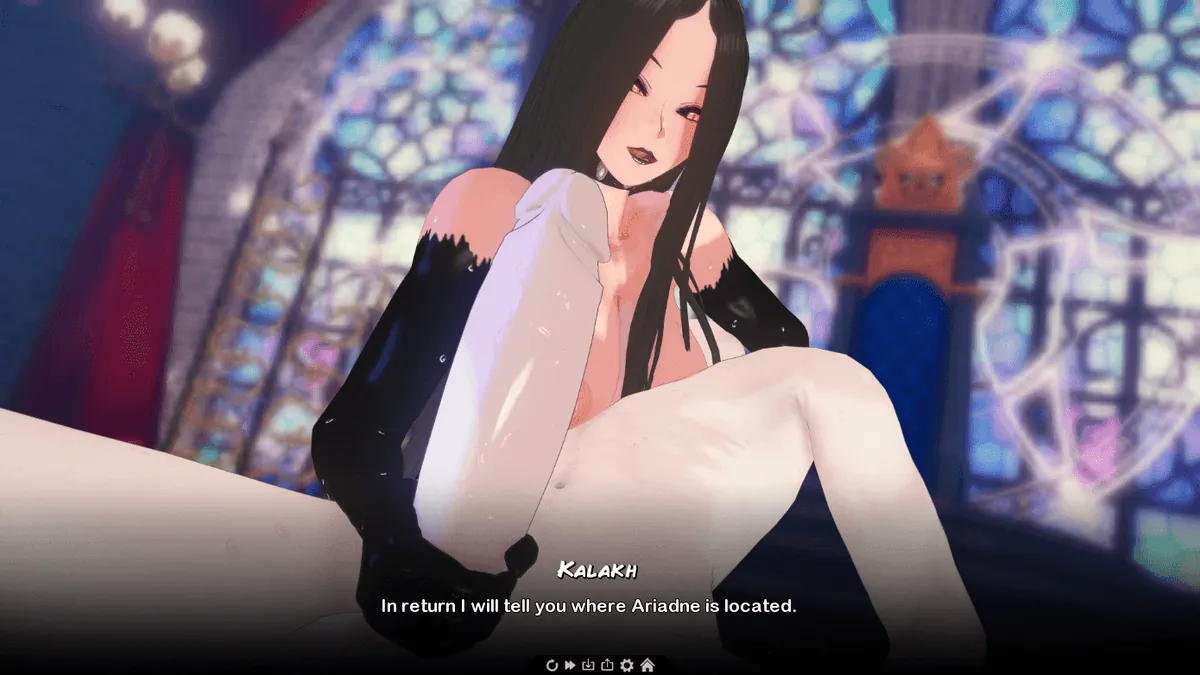
How I Became the Bodyguard of the Saintess!
Play How I Became the Bodyguard of the Saintess!
How I Became the Bodyguard of the Saintess! Screenshots












How I Became the Bodyguard of the Saintess! review
Complete Overview of Gameplay, Features, and What to Expect
How I Became the Bodyguard of the Saintess! is a fantasy-themed game that immerses players in a unique narrative experience. The game places you in the role of a protective figure tasked with safeguarding a noble Saintess while uncovering secrets within a majestic palace setting. With its distinctive anime art style, engaging gameplay mechanics, and rich storytelling elements, this title offers players an opportunity to explore complex character dynamics and narrative depth. Whether you’re new to the game or looking to enhance your experience, understanding its core features and mechanics will help you make the most of your gameplay journey.
Understanding the Game’s Core Concept and Setting
Ever stumbled into a game that completely rewires your expectations of what a story can be? 🤯 That was my exact experience with How I Became the Bodyguard of the Saintess!. I went in thinking it was a straightforward fantasy adventure game about swinging a sword and blocking doors. What I found was a deeply layered, emotionally charged journey that completely captivated me. At its heart, How I Became the Bodyguard of the Saintess game is a masterclass in blending high-stakes protection duties with intimate, narrative-driven character exploration. Let’s pull back the curtain on this unique experience.
What is How I Became the Bodyguard of the Saintess!?
So, what’s the big deal? On the surface, the premise of this fantasy bodyguard game is simple: you are the newly appointed protector of the realm’s most important figure, the Saintess. Your job is to keep her safe. Full stop. But here’s the twist that hooked me—the game brilliantly subverts this trope. You’re not just a mute shield following orders. You are an active participant in a living, breathing political and personal drama unfolding within gilded walls.
The core loop of How I Became the Bodyguard of the Saintess! is a delicious duality. One minute, you’re assessing patrol routes, scrutinizing guests at a grand ball for threats, or dealing with a sudden assassination attempt in a shadowy corridor. The next, you’re sharing a quiet moment in a palace garden, where a seemingly offhand comment from the Saintess reveals a flicker of doubt, a hidden fear, or a secret longing that contradicts her pristine public image. This isn’t just a job; it’s an investigation into the soul of the person you’re sworn to guard.
My Tip: Don’t treat conversations as filler. Every dialogue choice in this narrative-driven game is a tool. Are you the stoic professional, the empathetic confidant, or the shrewd investigator? Your approach directly shapes your relationship and unlocks different narrative branches.
The genius of this Saintess character game is how it makes both halves of gameplay feed into each other. The trust you build during conversations can lead to her revealing crucial information that helps you thwart a plot. Conversely, successfully protecting her in a crisis deepens her reliance and openness toward you. It creates a profoundly satisfying cycle where emotional investment directly impacts tactical success.
Example of a typical protection mission scenario and how it leads to character development: Early on, I was tasked with escorting the Saintess through the bustling lower palace markets during a festival—a classic “soft target” scenario. 🎪 My focus was on crowd control and watching for pickpockets or sudden movements. The mission was tense but straightforward. However, on the way back, she paused by a simple food stall selling honey cakes, a commoner’s treat. She mentioned, with a distant smile, that they smelled like the ones her grandmother made before she was taken to the palace as a child.
That one, quiet moment of vulnerability, prompted by the environment of the mission, changed everything. It wasn’t in a scripted cutscene; it was organic. Later, when palace intrigue suggested a threat might be connected to her forgotten past, that memory became a key piece of the puzzle. The “protection mission” provided the setting, but the character relationship mechanics turned it into a pivotal story beat. I wasn’t just a bodyguard anymore; I was the only person she might have trusted with that memory.
The Fantasy World and Palace Environment
The world of How I Became the Bodyguard of the Saintess! is a character in itself. 🏰 We’re not talking about a generic medieval fantasy land. This is a realm where radiant divine magic, overseen by a powerful Church, is the bedrock of society—and the source of its most vicious power struggles. The Saintess isn’t just a spiritual figure; she’s a political pawn, a symbol of hope, and a vessel of immense power, all wrapped into one. This context makes your role infinitely more complex than mere monster-slaying.
And where does 90% of this simmering drama take place? The palace. This isn’t just a backdrop; it’s the intricate game board for this fantasy adventure game. The palace setting gameplay is absolutely central. You’ll get to know every opulent hall, secluded chapel, dusty archive, and perfumed garden like the back of your hand. But here’s the catch: its beauty is a facade.
- The Gilded Cage: The palace is a prison of etiquette and surveillance. Every servant, noble, and priest could be a loyal ally or a hidden enemy. You learn to read rooms not just for physical threats, but for social ones—a lingering glance, a whispered conversation that stops when you enter.
- A Hub for Discovery: The palace is littered with opportunities for discovery. A misplaced letter in the library, a hidden passage behind a tapestry, a forbidden section of the archives—exploration is key. The game rewards your curiosity, allowing you to uncover secrets that the main narrative might not hand you directly.
- Contrasting Environments: The game plays masterfully with contrast. You’ll move from the overwhelming, noisy piety of the grand cathedral during a ceremony to the haunting, silent solitude of the Saintess’s private chambers. This environmental storytelling constantly reinforces her isolation and the weight of her role.
This confined yet deeply detailed setting is what makes the narrative-driven game so intense. The threats aren’t always ogres at the gates; they’re poisoned wine at a banquet, a doctored holy text, or blackmail delivered with a polite smile. Your battlefield is drawing rooms and corridors, and your weapon is often your wit and perception just as much as your blade.
| Palace Zone | Primary Function | Common Dangers & Secrets |
|---|---|---|
| The Grand Cathedral & Sanctum | Public ceremonies, official duties. | Crowd-based threats, doctrinal sabotage, hidden religious artifacts. |
| The Noble Quarters & Council Halls | Political maneuvering, social gatherings. | Poison, espionage, blackmail, alliance-building (or breaking). |
| The Saintess’s Private Wing | Rest, private study, personal time. | Intimate conversations, personal mementos, clues to her past, isolated attack vectors. |
| The Lower Servant Areas & Archives | Logistics, knowledge, the “unseen” palace. | Rumors, historical records revealing secrets, covert meetings, backdoor access routes. |
Character Dynamics and Narrative Framework
If the palace is the stage, the characters are the unforgettable performers. 🎭 This is where How I Became the Bodyguard of the Saintess game truly shines as a Saintess character game. The narrative framework is built on a powerful central contradiction: the public icon versus the private individual.
The Saintess you see during the day is beatific, composed, and recites scripture with perfect grace. She is the symbol. But the woman you interact with in private moments is a kaleidoscope of other traits: perhaps witty, sarcastically funny, deeply afraid, intellectually restless, or burdened by a past she’s not allowed to acknowledge. Uncovering these layers is the core pleasure of the game. You’re not just protecting a title; you’re getting to know a person, and deciding what you think of her—and what she represents.
The character relationship mechanics are sophisticated. This isn’t a simple “like/dislike” meter. Your relationship evolves based on:
* Consistency: Do your actions match your words? If you preach caution but constantly charge into danger recklessly, she’ll note the hypocrisy.
* Competence vs. Compassion: Saving her life proves your skill. Remembering a small personal detail she shared weeks ago proves your care. The game values both.
* Choice of Agency: Do you encourage her to accept her gilded cage for safety, or do you support her small acts of rebellion and self-discovery? These choices dramatically alter the story’s path.
And it’s not just about her. The palace is full of other compelling figures—the ambitious High Priest, the wary Captain of the Guard, the enigmatic spymaster, the rival noble house heirs. Your interactions with them, often observed or later discussed with the Saintess, create a complex web of alliances and enmities that directly affect your mission’s difficulty and the plot’s direction.
This narrative-driven game uses a “slow burn” approach to storytelling. Major plot twists concerning forbidden secrets—about the Church’s true history, the source of the Saintess’s power, or conspiracies within the royal bloodline—are earned. They are pieced together from fragmented diary entries, decoded secret messages, and heart-to-heart conversations that only unlock after building sufficient trust. The payoff isn’t just a cutscene; it’s the satisfying click of a puzzle piece you helped find, slotting into place.
In How I Became the Bodyguard of the Saintess!, you quickly learn that the greatest threats are rarely the ones that come with a drawn blade. They are the slow corrosion of doubt, the poison of a well-placed lie, and the tragedy of a person crushed by the weight of a destiny they never chose. Your sword arm is important, but in this deeply immersive fantasy bodyguard game, your greatest tools are your perception, your empathy, and the fragile, hard-earned trust you build within the shadowy, glorious confines of the palace. It’s an adventure that plays out as much in quiet conversations as in tense standoffs, and that’s what makes it truly unforgettable. ✨
How I Became the Bodyguard of the Saintess! offers a distinctive gaming experience that combines fantasy storytelling with engaging gameplay mechanics. The game’s anime art style, complex narrative structure, and character-driven gameplay create an immersive world where players can explore relationships and uncover secrets within the palace setting. From understanding the core concept and visual design to mastering gameplay mechanics and accessing the game, this guide provides comprehensive information for both new and experienced players. Whether you’re drawn to the narrative depth, artistic presentation, or unique gameplay systems, this game delivers a rich experience that rewards exploration and engagement. Start your journey as the Saintess’s protector today and discover what secrets await within the palace walls.