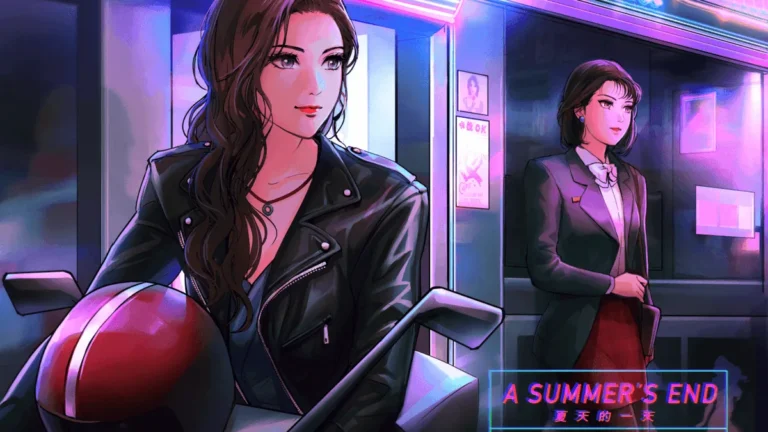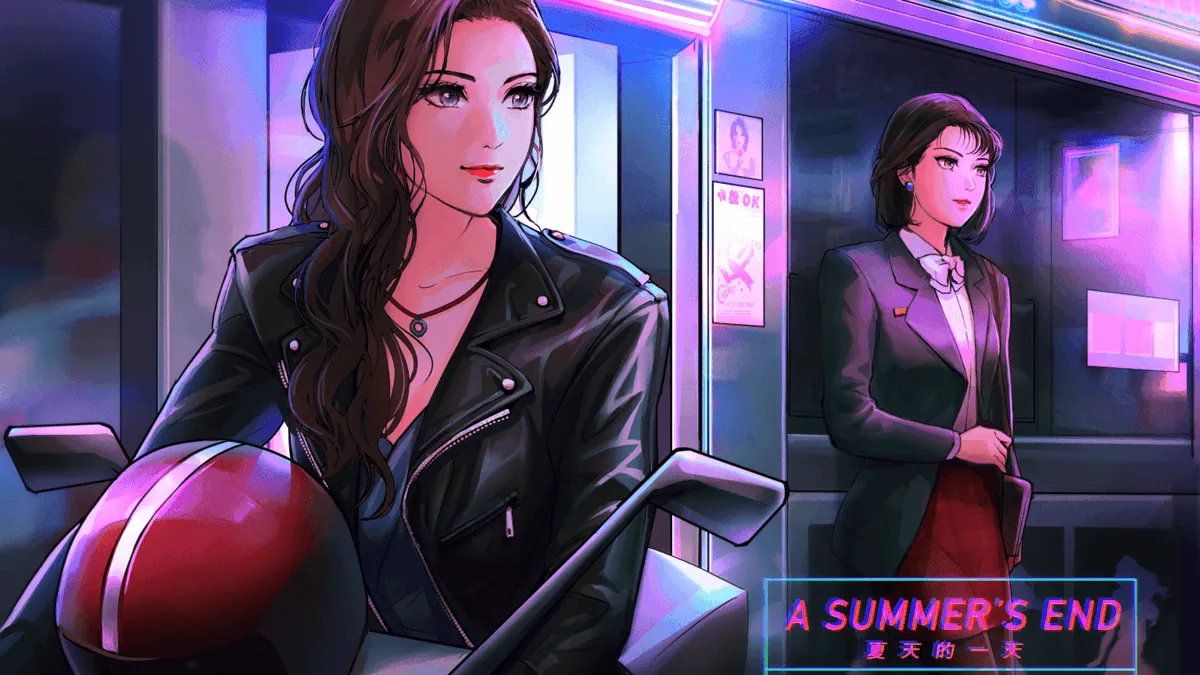
A Summer’s End – Hong Kong, 1986
Play A Summer’s End – Hong Kong, 1986
A Summer’s End – Hong Kong, 1986 Screenshots







A Summer’s End – Hong Kong, 1986 review
Exploring the acclaimed romance game set in 1980s Hong Kong
A Summer’s End – Hong Kong, 1986 stands as a remarkable visual novel that captures the essence of 1980s Hong Kong through an intimate romance narrative. This interactive story follows Michelle and Sam as their chance meeting blossoms into a deeper connection amid the vibrant neon-lit streets and cultural complexity of the era. The game masterfully blends authentic Hong Kong settings with compelling character development, exploring themes of identity, family dynamics, and love in a conservative cultural context. Whether you’re a visual novel enthusiast or interested in LGBTQ+ storytelling, this guide explores what makes A Summer’s End a standout title in the genre.
Story, Characters, and Narrative Experience in A Summer’s End
Stepping into A Summer’s End – Hong Kong, 1986 feels like opening a time capsule 📼. You’re immediately enveloped by the humid air, the neon glow of Nathan Road, and the soft crackle of a mixtape—a world poised between tradition and explosive change. At its heart, this isn’t just a game; it’s an intimate 1980s Hong Kong love story that masterfully uses its setting as a character itself. The visual novel romance narrative is a delicate, powerful exploration of two women finding each other amidst the noise of a bustling city and the expectations of their families. From my first playthrough, I was struck by how it handles profound themes with a gentle, authentic touch, making every choice feel deeply personal. Let’s pull up a chair at the cha chaan teng and dive into the rich story, unforgettable characters, and the narrative experience that makes this LGBTQ+ visual novel game so special. ✨
The Central Romance: Michelle and Sam’s Connection
The magic of the A Summer’s End Hong Kong 1986 story truly begins with a chance encounter. Michelle, a somewhat listless office worker living a routine life under her mother’s watchful eye, meets Sam, a confident and independent woman who runs a video rental store. It’s a classic “opposites attract” setup, but the writing gives it incredible depth.
Michelle is someone I think many of us can relate to. 😌 She’s navigating that post-education uncertainty, working a job that pays the bills but doesn’t feed her soul, and feeling the weight of familial duty. Her world is small, dictated by schedule and propriety. Then Sam crashes into it—literally, in their first meeting—like a bolt of colorful, vibrant energy. Sam represents freedom, artistic passion, and a self-assured identity that Michelle quietly yearns for.
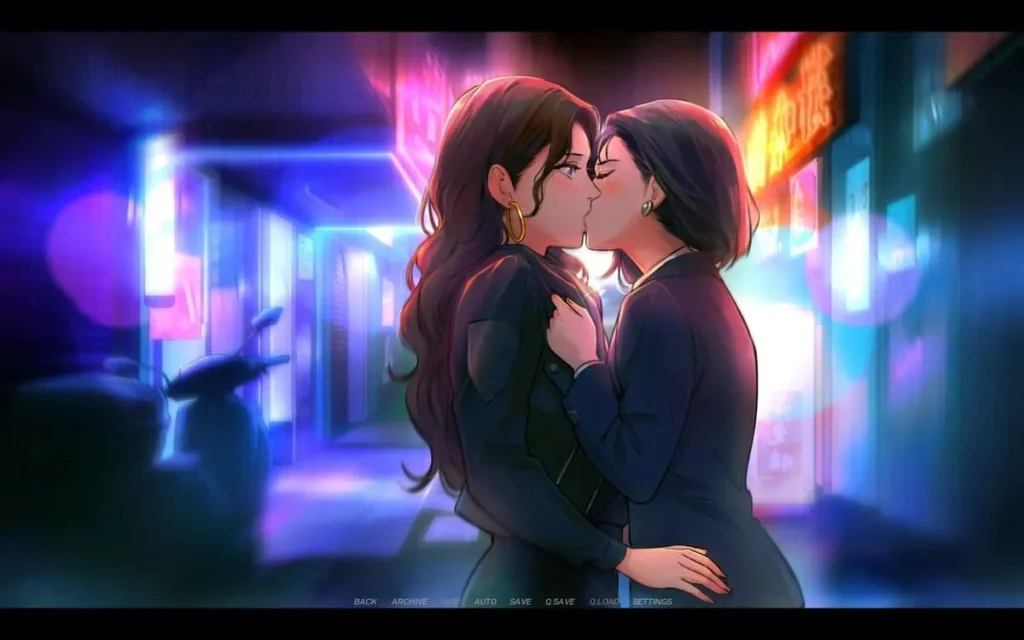
Their relationship develops with a beautifully slow burn. This isn’t instant love; it’s curiosity, tentative friendship, and the thrilling, terrifying realization of a deeper connection. The game excels in showing, not telling. A lingering glance over a bowl of noodles, the careful choice of a song on a mixtape, the unspoken understanding during a walk through the night market—these moments build the Michelle and Sam relationship brick by emotional brick. 🧱❤️
What makes their dynamic so compelling is how they challenge and complement each other. Michelle begins to question the narrow path laid out for her, inspired by Sam’s authenticity. Sam, in turn, finds in Michelle a grounding presence and a different kind of courage. Their romance is a journey of mutual discovery, and as the player, you feel every step of that journey intimately. You’re not just watching a romance unfold; you’re actively participating in its fragile, beautiful construction through your visual novel endings choices.
Supporting Characters and Relationship Dynamics
While Michelle and Sam’s romance is the sun at the center of this solar system, the supporting A Summer’s End characters are essential planets that exert their own gravitational pull, shaping the narrative’s orbit. The most pivotal of these is, without a doubt, Joey.
Joey is Michelle’s well-meaning but ultimately mismatched suitor, set up by her mother. He’s the “nice guy,” the safe, traditional choice that represents the life expected of Michelle. 🎩 His role is genius from a narrative perspective. Joey isn’t a villain; he’s a symptom of the societal pressure Michelle faces. Your interactions with him—whether you’re politely distant, openly conflicted, or attempt to force a connection—directly fuel the game’s major branching paths. He is the living embodiment of the choice between obligation and desire.
Then there’s Michelle’s mother, a paramount presence whose influence looms over every scene, even when she’s not physically there. Her expectations are a constant, low-pressure system in Michelle’s life. The game brilliantly uses family not as a source of melodramatic conflict, but as a complex, loving, and sometimes stifling force. The authentic representation of East Asian communication styles—where much is conveyed through action, silence, and implication rather than direct confrontation—adds a layer of profound realism. You feel the weight of unsaid words at the dinner table.
To help visualize this web of relationships, here’s a quick overview of the key players:
| Character | Role | Relationship to Michelle |
|---|---|---|
| Michelle | Protagonist | Office worker seeking meaning beyond her routine life. |
| Sam | Love Interest | Independent video store owner who challenges Michelle’s worldview and becomes her romantic partner. |
| Joey | Supporting Character / Suitor | The “appropriate” match arranged by Michelle’s mother; his treatment is a major narrative branch. |
| Michelle’s Mother | Supporting Character | A loving but traditional figure whose expectations represent societal and familial pressure. |
These dynamics ensure the A Summer’s End Hong Kong 1986 story is never just about a romance in a vacuum. It’s a story about how that romance exists within, and pushes against, a fully realized world of other relationships and responsibilities.
Themes of Identity and Cultural Context
Beyond the beautiful visual novel romance narrative, A Summer’s End is a profound meditation on identity. It asks: who are we when the world is changing faster than we can keep up, and who do we become when we choose love that defies convention? 🌆 The game is set in 1986 Hong Kong, a specific moment on the cusp of the handover, where anxiety about the future mingled with vibrant cultural expression. This isn’t just a backdrop; it’s a mirror for the characters’ personal journeys.
Michelle and Sam are both, in their own ways, seeking meaning. Michelle’s search is internal and nebulous—a feeling that there must be more. Sam’s search is externalized through her art, her business, and her open demeanor. Their collision is a collision of worldviews, but also a fusion that creates something new for both of them. The game presents a powerful quote that encapsulates this tension:
“Two different worlds… crashing into each other. And in the middle of it all, we found something. Something real.”
This “crash” isn’t destructive, but creative. It’s about the beautiful, messy formation of a shared identity against a landscape of change. As an LGBTQ+ visual novel game, it thoughtfully explores what it means to find that identity in a conservative culture. The potential for homophobia and family conflict is present, but crucially, the story doesn’t veer into well-worn tropes of tragedy. Instead, it focuses on the quiet anxiety, the careful calculations of disclosure, and the resilient hope that defines so many real-world experiences. It’s a narrative of empowerment, not punishment.
Your visual novel endings choices are where these themes become actionable. The game offers two distinct conclusions, and they hinge entirely on your courage and honesty as Michelle. Will you prioritize external harmony and the path of least resistance, or will you embrace the difficult, authentic truth of your heart? 💖 One ending provides a bittersweet closure that honors familial duty, while the other offers a hopeful, forward-looking resolution for Michelle and Sam. Neither is framed as strictly “good” or “bad”; they are emotional outcomes that reflect the weight of the game’s central questions. This is what gives the A Summer’s End Hong Kong 1986 story its incredible replay value—you’ll want to explore both to fully grasp the narrative’s emotional spectrum.
A final, practical note for players: the game includes an optional adult patch. From my experience, this content is handled with remarkable maturity. It’s less about titillation and more about deepening the emotional and physical intimacy between Michelle and Sam, serving as a natural culmination of their romantic arc. It enhances the narrative for those who choose it but is in no way essential to understanding or appreciating the profound 1980s Hong Kong love story at its core.
In the end, A Summer’s End leaves you with more than just memories of a story; it leaves you with a feeling—a nostalgic, hopeful ache for a specific time, place, and the courage it takes to choose your own path. It’s a testament to how powerful the visual novel romance narrative can be when it’s crafted with this much care, authenticity, and love for its characters and their world.
A Summer’s End – Hong Kong, 1986 represents a thoughtfully crafted visual novel that transcends typical genre conventions through its authentic cultural representation, compelling narrative, and artistic excellence. The game successfully balances intimate character development with broader themes of identity and belonging, creating an experience that resonates with players seeking meaningful storytelling. From its meticulously researched Hong Kong settings to its hand-drawn aesthetic inspired by 1980s media, every element contributes to an immersive journey through a pivotal moment in Michelle and Sam’s lives. Whether you’re drawn to the game for its romance, its visual style, its cultural authenticity, or its thoughtful exploration of LGBTQ+ themes, A Summer’s End offers a rich and rewarding experience that lingers long after the credits roll. For those interested in visual novels that prioritize emotional depth and artistic integrity, this title deserves a place in your collection.